0 comment(s) so far. Please add yours!
Apparently, for me, “annual” is one of those words that benefits from a generous interpretation. So, in that spirit, it’s been… well… rather longer than I’d intended since I last stopped to look around and ask what I’ve been doing here.
On one level, that’s an easy question to answer. This past year I’ve written about ASSville and Usenet, Saint Clare, travelling to England, Wales, Ireland, Las Vegas, San Diego, and, well, lots of places with Sutti, school uniforms, gardens, old books, new books, and whatever else happened to catch my attention. Looking back over the archive, I’m also genuinely startled by how much I actually posted between my first anniversary post on June 20, 2025 and now. Because there was so much more I intended to write about.1There are, I confess, 17 drafts in various states of “written.” And a lot of other ideas. Still, there are, as of today, 110 published posts on Mija’s Room. Seventy-three of them were written during that period.
That’s about two-thirds of the blog. And that number doesn’t capture the scale of it, because some posts run well over 5,000 words. Nor does the archive show how much writing was happening when I wasn’t posting. There were months when very little appeared on the site, but I was still writing constantly. Saint Clare School, Inez especially, is an iceberg. What I’ve posted is only the smallest visible part of a much larger body of letters, diaries, reports, scenes, notes, timelines, and other material I’ve been building behind the scenes.
So the rhythm of the blog isn’t really one of writing and not writing. It’s more a matter of what rises to the surface.
There were also practical reasons why some stretches were quieter online. I had two surgeries, spent months in physical therapy, travelled to the UK twice, lived on my own, kept house, planted gardens, and am now in the middle of a bathroom addition.2Pictures of the process are available. Viewing is not advisable.
Life happens. So does writing.
…And then there was November 2025.
November alone was its own small weather system.
What began as AdAstraWriMo turned into something like 43,000 words of Saint Clare material, along with *Music of Discipline*, *The Angel Ruston*, the *MP Visits Saint Clare* sequence, and the increasingly necessary *Correction Corner*. At some point I stopped merely writing stories set at Saint Clare and started producing the documentary remains of an institution that never existed but, for me, came alive.
The most important thing about all that writing, though, probably isn’t the word count. Somewhere in the process, writing became fun again.
Not useful, productive, professionally advantageous fun. Not writing because something needed to be finished, submitted, assessed, or crossed off a list. I mean the kind of writing I remember from ASS and SSS, when I’d get caught up in a story or an idea simply because I wanted to see where it went.
Saint Clare School gave me that back in a way I hadn’t realized I’d been missing.3And a reason to watch Downton Abbey, which I’d avoided/missed I look forward to writing: waking up with a scene in my head, suddenly understanding why a character did something, disappearing into research about some absurdly specific detail of British school life in 1955,4Oh and reading… I’ve read so much history and fiction about/set in 1920-1960. It has been amazing. or discovering that what I thought was a minor inconsistency has opened the door to an entirely new story.
Rather wonderfully, it needn’t accomplish anything practical. It doesn’t need to become academic work to justify the time spentt, or prove that it’s productive. I don’t need to write a novel. I doubt it could be monetized even if I had any interest in doing so. My imagination isn’t frivolous simply because I’m chiefly using it for my own pleasure. I’d forgotten that. Shame on me.
Maybe that’s another reason Saint Clare School has become so vivid. It isn’t merely recovering an old setting or returning to the sort of stories I used to write. I’ve gotten to recover a way of writing and world-building I’d once loved, spent endless childhood summer hours doing. Apparently this happens when I’m given a room and left unsupervised. And, especially, when my computer is connected to my brain rather than social media. When its only intelligence is mine.
Plus, in addition to those posts, there are the 55 pages. Those aren’t all website furniture. They’re archived stories, old pieces of writing I don’t want to lose, reference pages, indexes, collections, a 31 year old FAQ, and all sorts of things that don’t quite belong in the chronological flow of the blog but absolutely belong in the room.
Collectively the posts and pages make Mija’s Room much more than a blog archive. It’s become a place to gather up work that otherwise remained scattered across old hard drives, vanished websites, Usenet archives, forgotten folders, and bits of paper. Now that I think about it, this may be one of the most important things I’ve been doing here.
That archival work isn’t limited to Mija’s Room, either.
I’ve spent a frankly ridiculous amount of time entering dozens and dozens of my old ASS and SSS stories and posts into the ExpressionEngine system Paul and I are using to manage the new-and-improved Pablo & Mija’s Treehouse. Paul has done most (okay, ALL) the technical building; I’ve been doing a lot of the digging, sorting, rereading, and feeding things back into it.
The Treehouse still isn’t public yet, but it’s getting closer. Putting it back into a living structure feels less like reposting old work than rebuilding part of the neighborhood it once belonged to. And somewhere along the way, all this digging through ASS, SSS, old websites, archived posts, and my own memories of Usenet began turning back into academic work.
I’m developing a research project on Usenet that draws directly on my years in ASS and SSS: not just as someone looking back at an archive, but as someone who was actually there, posting, moderating, arguing, watching norms develop, and seeing what happened when a community had to figure out how to govern itself before and without any platform owner doing it for us. I don’t yet know what shape that project will take. But it’s been one of the more unexpected things to come out of returning to Mija’s Room: writing here hasn’t just recovered old material. It’s changed what I want to study.
Which perhaps raises the more interesting/relevant question: what is Mija’s Room actually about?
People sometimes assume it’s a spanking blog. They’re not entirely wrong, but it’s also not a spanking blog in the sense of, say, *The Spanking Blog* or the way *The Punishment Book* was. Spanking stories and other such musings are part of what’s here — a big part of what’s here because that’s who Mija is. It’s who I am. But they’re no more the whole of the room than the nightstand next to the bed isthe whole of my bedroom.
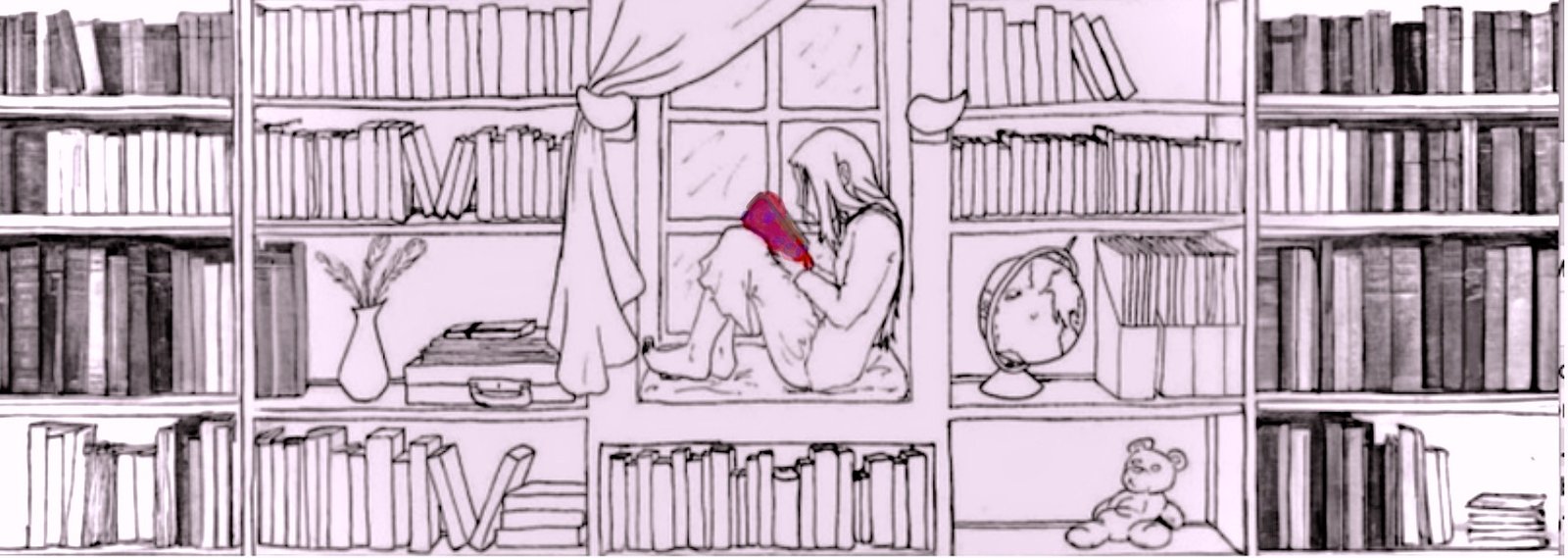
I’ve realised over the past year that back in May 2023 — that’s when I first registered the domain — I chose “Mija’s Room” before understanding why that felt right. For more than a year before I finally opened the site to the public, I spent an absurd amount of time choosing fonts, colours, artwork, and especially designing the banner. I found I couldn’t begin writing until the room itself looked right.
This isn’t the first time I’ve experienced this. It’s been true of every blog I’ve ever written. That probably sounds odd to people who think of a website as a container for content. But that’s because I’ve never experienced the web that way. Which can be kind of a pain. I do judge books by their covers, at least in part. I’ve never been much of an RSS reader because I don’t only want to read what someone wrote. I want to visit *where* they wrote it. I want to see the colours they chose, the artwork over the mantelpiece, the books on the shelves, the odd little things in the sidebar that tell me who lives there and what they find interesting and important. http://Seriously, wouldn’t it be great to know what sort of pens, paper, desk individual writers favor?
This can, of course, be a problem if the site itself is full of ads and pop-ups and the like, so it’s not necessarily A Good Thing. But how a place looks tells me something about how its owner hopes readers will feel while they’re there.
Looking back, I think I’ve always thought of websites as places rather than platforms. Those of us who came from the “old” web often gave our sites names that reflected that. We built Treehouses, Castles, Libraries, Schools, Houses, Corners, and Woodsheds. We weren’t only building audiences5Don’t get me wrong — audiences are important. People write more when they know someone’s reading them. so much as making somewhere other people might enjoy visiting. Only recently did it occur to me that I’d done exactly the same thing again, revealing, no doubt, my Gen X-ness.
This isn’t “Mija’s Blog” or “Another Blog” or whatever. It’s my room. A room isn’t simply somewhere people are invited into; it’s somewhere that belongs to someone. It’s a space where we read, write, keep journals, change the pictures on the walls, try out new ideas, invite friends in to sit for a while, and, occasionally, go quiet, shut the door and be alone for a bit.
Those two ideas, invitation and solitude, aren’t opposites. In fact, one makes the other possible. And maybe that realization has something to do with changes outside this particular room too.
One of the quieter changes this year came from a friend who suggested I make a daily practice of noticing “small victories.” I started using #smallvictories for the ordinary things I might otherwise have dismissed: getting something fixed, making a difficult phone call, planting something, getting up early, organizing a drawer, solving a problem, keeping the house moving, finishing a piece of writing, getting myself through a hard day.
It sounds small. It isn’t. Paying attention to those things helped me see myself as competent in ways I haven’t ever believed I was, and, sadly, in ways I was too often told I wasn’t. The accumulation matters. Not because every ordinary task needs to become an achievement, but because I’d spent a long time overlooking evidence that I could manage things, figure things out, recover from mistakes, and keep going. Living alone, in many ways for the first time, has given me quite a lot of that evidence.6As has the correct diagnosis of AuDHD. But that’s another post.
And when I look at the year as a whole -surgeries and physical therapy, gardens and travel, writing and archives, old friendships and new ones, houses both physical and virtual- it isn’t all posts and projects. A great many small victories that, seen together, made a good year, make a good life.
Alone, in many ways for the first time, my life is inarguably better than it was a year or two ago. That’s a startling thing to write. I don’t think it means that everything is easy, settled, or even necessarily going where I thought it would. It means that when I look around at the life I’m actually living, I recognize myself in it. It’s not perfect, but its good.
Maybe that’s part of what I’ve been doing here too. The more at home Mija is in this room, the more I’m comfortable inviting other people in. That probably explains why the blog has wandered so happily between subjects this year. The room hasn’t changed. What’s lying open on the table has.
One week it might be an old Usenet thread. The next it might be a snippet of a novel. Or a schoolgirl’s diary from Saint Clare. Or a travel checklist. Or a reflection on gardening. Or Sutti asleep while I try to finish one more paragraph. They’re all things that have found their way into the room during this annual-ish interval.
So if you’ve been visiting for a while, thank you. And if you’ve only just found the place, welcome. Pull up a cozy chair or floor cushion. Share the window seat. There are plenty of books. There’s always coffee and the kettle’s probably on. No doubt I’m in the middle of something I’d love to show you and hear what you think.
And increasingly, I’m thinking about what happens when we leave our individual rooms and find one another.
Last November I spent much of the month disappearing into Saint Clare’s. I expect I’ll be doing plenty of writing this November too, but I’m also thinking more deliberately about community — not an audience, but people finding one another.
Paul and I are getting the Treehouse closer to reopening. I’m working on a webring that can connect personal spanking sites rather than expecting everyone to gather on a single platform. And we’re building a forum for the sort of longer writing and conversation that used to happen so naturally on Usenet and is difficult to sustain on social media.
None of these are attempts to recreate 1997 exactly. I don’t think we could, and I’m not sure we’d want to. But there are things about that older internet I want to carry forward: people making their own places, linking to one another, writing things longer than a screenful, replying with more than a thumb, talking back, and building connections that don’t depend entirely on somebody else’s platform.
And then closing down our machines, not caring whether or not we have our phones. Not being “always on” or “always connected.” Giving ourselves the space and quiet to build our inner lives and the lives we live away from the screen.
Maybe that’s the kind of community I’m interested in now: one that helps us find one another without demanding all our attention all the time.
- 1There are, I confess, 17 drafts in various states of “written.” And a lot of other ideas. ↩︎
- 2Pictures of the process are available. Viewing is not advisable. ↩︎
- 3And a reason to watch Downton Abbey, which I’d avoided/missed ↩︎
- 4Oh and reading… I’ve read so much history and fiction about/set in 1920-1960. It has been amazing. ↩︎
- 5Don’t get me wrong — audiences are important. People write more when they know someone’s reading them. ↩︎
- 6As has the correct diagnosis of AuDHD. But that’s another post. ↩︎