6 comment(s) so far. Please add yours!
Once Upon a Time in ASSville
Note:
A caveat: Human memory is a notoriously unreliable archive. The ASSville I describe in these posts is necessarily partial, shaped by my own experiences, friendships, conflicts, blind spots, and affections. My “golden years”1The term “golden years” refers to the newbie energy people tend to have when they first came on the group. Whenever it was, it was, in their memories, always the group’s *best* time. on the group were roughly 1996 through 1998. Other residents arrived earlier, came after, occupied different social circles, and likely will remember events differently.
I hope they will tell me about it, here or elsewhere.
One of my goals for this series of posts is not sharing and preserving my memories –that’s what The Treehouse is for– but to begin a conversation about our shared past or pasts. If you were there and remember things differently, if I’ve gotten details wrong, overlooked important people or events, or misunderstood something, please leave a comment. Likwise, share what you remember if it’s similar too. The history of ASSville, like ASSville itself, was collectively made. Perhaps the remembering it can be collective as well. Of course, if you weren’t there and have questions, please ask them.
Introduction
At a munch in Culver City a couple weekends ago someone was asking if I knew what was going on with Laura’s site [I don’t but did post instructions on how to use Wayback Machine to find it] and we ended up discussing what early internet communities were like before social media, a conversation that is becoming more and more familiar. Usually they imagine something primitive: anonymous message boards, chaos, trolls, isolated people typing into the void.
These posts under the “Notes from Assville” banner are my attempt to answer this. They’re also an exercise in memory that may connect my academic and kink writing. But mostly it’s because the Usenet spanking community (AKA ASSville) was my first and most profound experience of community on the internet.
Note: The first version of this his was written a few months ago. I’ve posted it today in part because I think it relates well to the discussion in the comments of my July 4, 2026 post: “Notes from ASSville: Introducing a Town Built of Text.”
What was this place?
I start with the idea of “space” and “place” because, for me, alt.sex.spanking/soc.sexuality.spanking (colletively known as “Assville”) was always more than a digital space. It existed (and in my memory still does) as a place. This makes it quite different from Twitter or any other electronic community I’ve ever been part of. It’s special. 2Actually “special” doesn’t even cover it. For me, it’s home in a way no space, vanilla or otherwise, felt before or since. This, even though it called itself “Assville,” something I’ve always found profoundly embarrassing.
“ASSville” as a town3There are early stories out there that refer to it as a university (I think that maybe was rude too), reflecting, no doubt Usenet’s pre and post Eternal September and the over-representation of academic and students in the community. grew out of the Usenet spanking community surrounding alt.sex.spanking / soc.sexuality.spanking in the 1990s. If you weren’t there, that surely sounds ridiculous already, a rude schoolboy joke – like I’m writing about a place called “Bumland.” Inside the community, we would mostly have agreed. Ridiculousness was intrinsic to the group culture. As a community we liked parody, satire, gossip, absurd public performances, elaborate inside jokes, and theatricality. We liked being funny in a groaning kinda way.4Example: I delurked right in the middle of discussions about moving alt.sex.spanking to the soc* hierarchy (a big fucking deal — more on that history later). The long long long discussion threads were under the subject line “Moving Assville.” A few months later that subject line had morphed into “Assville: The Movie.”
But looking back now through my old posts, roleplay threads, stories, websites, and contests,5What I have of those 1997-1999 posts are tiny tiny fragments of what I posted — mostly ones that were saved by being posted to Laura’s and/or The Treehouse, or that I’d sent via email often enough to have saved the document. Beyond that, no. I don’t have the posts or emails from those years. I wish I did. what strikes me most is not the kink itself. Rather it is how completely people inhabited the place. How that felt like belonging, to and from.
ASSville was not merely a discussion group or internet community; it was a town.
Not metaphorically, though yes, of course. But mainly socially.
The community developed neighborhoods, recurring landmarks, public institutions, local celebrities, newspapers, schools, running jokes, scandals, folklore, and, probably most importantly, a shared emotional geography. We had a newspaper called The Town Crier (I did mention the puns, right?). There were boarding houses, castles, flower shops, and a town square. People referred to “their end of town.” Spam was referred to as “trash.” Stories overlapped and referenced one another. Characters wandered between narratives and, sometimes, authors. Police chiefs and coaches, sock-puppets and trolls, muttering madmen. Shared settings accumulated lore.
When I started lurking on alt.sex.spanking in 1996 I genuinely half-believed there might be a physical ASSville somewhere. [I imagined it in Florida… of course. Assville as something like a spanking version of The Villages.]
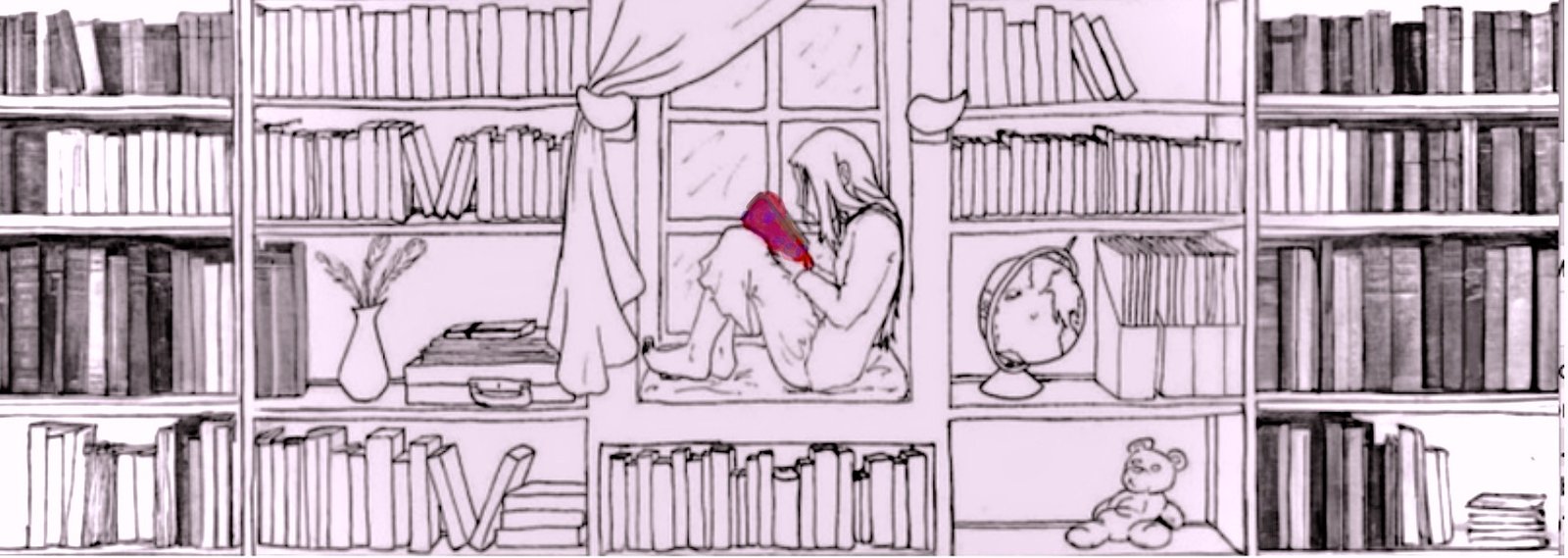
That sounds so absurd now,6Okay. Not just now. The people I mentioned it to in 1997 also thought it odd. But then again they probably understood how newsgroups worked a lot better than me. but it also reveals something important. That for me and many, many others the place was experientially real enough that my brain modeled it spatially. I knew where people “lived” and who with. I knew where trouble tended to happen. I knew which personalities gathered together. I was part of a little posse of “brats” (women mostly) who wrote community posts when the muse took us. I knew where Pablo Stubbs and my own little corner of town, The Treehouse, was.7I wasn’t unique in this. There’s charming artwork out there. A poster, Z, did some some lovely stuff.
Writing for Readers, Readers for Writing
Because identity online (at the time) was almost entirely textual people became recognizable through their prose. You knew someone by their cadence, favorite genres, disciplinary philosophies, emotional tone, recurring jokes, or literary references. Our identities emerged through our writing.8This, and my not being the only newsgroup reader/writer who read and studied writing for a living, it wasn’t easy for people to hide by posting under another identity.
This was especially true because ASSville was deeply shaped by collaborative storytelling traditions. If someone wrote a particularly memorable school story, like, for example, Pablo Stubbs infamous, Such a Good Girl (which itself nods toward British boarding school stories of the first to middle twentieth century) another writer would quietly borrow a surname, a fictional school, a headmistress, or a setting as a nod toward the earlier story. Readers who recognized the references experienced a small flash of communal pleasure: not plagiarism, but continuity. A sense of fitting. Seeing and being seen in this virtual world.
That was how the culture worked. Stories conversed with one another. Many were collaboratively written.
The literary influences underneath all this mattered enormously. Many of us into the corporal punishment end of spanking were heavily shaped by British girls’ school fiction: Angela Brazil, Enid Blyton, Chalet School, St. Clare’s, Malory Towers, prefects, uniforms, midnight feasts, shame, loyalty, discipline, and emotional reintegration into community. Later, Harry Potter activated many of the same imaginative pleasures: houses, traditions, recurring authority figures, emotional geography, and institutions and traditions that felt far larger than the stories themselves.
Other stories came out of the traditions of Victorian flagelation porn. Romance novels. Penthouse letters. All the spaces we’d earlier found scraps of spanking writing and expanded them into fantasies. We recognized each other even though that didn’t speak to our own versions of the kink.9A universal? Everyone had looked up “spanking” in the dictionary. Some of us even had favorite dictionaries.
This sense of the newsgroup being built, in part on writing stories for each other brings me to something else that was huge in the development of writing for community.
YKINMKBYKIOK – Answering our shades of shame
Well, everyone here
Is wonderin’ what it’s like to be with somebody else
And everyone here’s to blame
And everyone here
Gets caught up in the pleasure of the pain
Yeah, well, everyone here hides shades of shame
Yeah, but lookin’ inside, we’re the same, we’re the same
And we’re all grown now
Yeah, but we don’t know how
To get it back to good
“Back 2 Good” From Matchbox 20‘s 1996 album: Yourself or Someone Like You
ASSville inherited its structure accidentally or at least organically.10I’ve got some theories on why stories were so important to ass/sss, but that’s a whole other post. At least one. But we were not simply posting fantasies as private journal entries. As discussed yesterday, we were collaboratively building an inhabitable textual world for groups of people that, largely11there were exceptions – but people like Tony Elka and Janet Hardy sort of proved this rule had never discussed spanking with another living soul, at least not one that shared it.
Importantly, no single person invented ASSville. The newsgroup, especially in its unmoderated alt.sex.spanking form, belonged to no one and, thus, to everyone. That matters because real towns are not authored or owned by individuals. They accumulate traditions, myths, conflicts, institutions, and local customs over time. ASSville evolved the same way.
So as above, some people wrote romance. Some wrote school stories. Some wrote comedy. Some wrote emotionally intense rituals of punishment and forgiveness. Abjection, redemption. Some wrote domestic discipline. Some wrote personal accounts of their own or witnessed child abuse. Some had fantasies about the same. Some wrote absurd public satire. All those modes coexisted uneasily, imperfectly, but often remarkably creatively.
The spanking kink contains multiple fantasies, with huge variegations in tone and archetypes. Our mutual acceptance and coexistence was necessary because spanking culture itself contained enormous internal contradictions and overlapped (ha!) and, well, didn’t.
From outside, (and alt.sex.bondage where we’d split off) you could flattened us into “people into spanking.” Inside the community, we knew perfectly well that similar symbols meant radically different things to different people.
For some, spanking was sensual romance. For others, comedy. For others, nostalgia. For others, emotional catharsis. For others, discipline and structure. Punishment, play. There was theatrical roleplay and school-story aesthetics. For still others, something deeply psychological and difficult to explain, even in the thousands upon thousands upon thousands of words that were spilled.
Often those meanings overlapped. The childhood imagery at the center of so much spanking culture was both light, evoking childhood and children at play, which, of course made it also edgy as hell.
That tension mattered because spanking occupied a strange cultural position in the late 1990s as it does now. Compared to broader BDSM communities, represented online through leather and dungeons and flaming torches, spanking superficially could appear playful, even mainstream-adjacent. Popular culture already circulated spanking imagery through sitcoms, naughty-schoolgirl jokes, cartoons, post-cards, and flirtatious comedy in ways it absolutely did not circulate broader BDSM.
Communities like alt.sex.bondage sometimes looked at us with (perhaps) understandable skepticism. Our joking, punning culture annoyed. Spanking culture was occasionally dismissed as “BDSM light.”
Dismissive and annoying, Honestly, though, they had a point.
Spanking culture in the 1990s (and now too) could and can be deeply heteronormative. It could and can reproduce traditional gender scripts. It could and can appear unserious compared to communities wrestling more directly with queer marginalization, sadomasochistic stigma, and the politics surrounding BDSM identity, all of us still in the shadow of the AIDS era.
But at the same time, many of us inside spanking communities were ourselves struggling against years of shame and self-loathing. People had been told they were sick, childish, ridiculous, broken, immoral, impossible to love.
So ASSville became not merely a place for fantasy, but a place of mutual recognition.
One of the defining phrases of that newsgroup era was:
“Your Kink Is Not My Kink But Your Kink Is Okay.” – YKINMKBYKIOK.
The phrase could sound glib from outside, but emotionally it functioned as a survival ethic. It meant: “I may not fully understand your emotional world. I may not want what you want. But I refuse to shame you for it.” That distinction was vital because the community contained enormous diversity of desire and meaning. Shared symbols did not imply shared experiences. And because identities were so textual and relational, “consent” in our cyber world became central to community life in ways that now feel surprisingly ahead of their time.
At one point I wrote a set of informal guidelines for communal roleplay threads. One section insisted people should not write others into scenes or assign them emotional reactions without permission. I described unwanted narrative inclusion as “virtual non-consensual play.” It came out of the group’s norm that no one should write about their play without the other person’s consent, especially if the person would be recognized or known. This was the case 30 years ago and has, for a lot of the community, continued to be an expectation.
That phrase, “virtual non-consensual” sounds startlingly contemporary now, but at the time we were trying to articulate something genuinely new: what does consent mean in collaboratively imagined spaces where personas are emotionally real? Are we our avatars? Do we “own” our digital selves?
For me, “Mija” was not a fictional character separate from myself. She was my cyber persona. A stylized version of me, certainly, but emotionally continuous with my actual identity. Someone assigning desires or reactions to “Mija” that contradicted my boundaries felt invasive in a very real sense.
The community gradually evolved norms around permission, persona integrity, collaborative pacing, emotional negotiation, and representational ethics. Those norms were imperfect, but they mattered enormously.
And they shaped the creative culture too.
The SSC, the Spanking Story Contest, eventually evolved categories intended not merely to let people write their favorite fantasies, but to encourage them, in the 500 word format, to attempt writing outside their own emotional territory.
That’s important.
People were not only saying, “Here is my fantasy.” They were also asking:
“I’m trying to write your world… did I get it? Do you like it?”
That question still moves me. An example of my attempting to do that is this story, “Confessions,” written for the 2004 Summer Short Story Contest, for and about a friend.
It reflects a deeply relational model of creativity. Not projection, not conquest, but imaginative listening. Can I understand your symbolic world well enough to write within it respectfully? Can I inhabit your emotional logic without erasing mine?
That ethos shaped everything: shared schools, imagined families, borrowed surnames, recurring headmistresses, collaborative settings, community jokes, and intertwined stories.
The result was a kind of participatory folk literature. No official canon. No single author. No consistency, but a odd continuity built from accumulated memory, affectionate references, inherited motifs, and ongoing communal improvisation.
And perhaps most strikingly, people made digital things for one another.
Friends wrote stories as gifts, or even peace offerings. People built websites archiving favorite authors. There were visual stories, fake insurance companies, television schedules for imaginary town networks, and elaborate satirical public events.
Paul and I archived our stories and stories by friends on our site, Pablo and Mija’s Treehouse. But those were such a tiny bit of the group. As were the large number of stories in Laura’s Courner, or Darla and Ming’s House, or in Castle Handyman.
Our calling it “Pablo and Mija’s Treehouse,” like the other geographic titles above, reveals something important. It wasn’t a “content repository” nor a “platform.” Not an archive.
A treehouse.
What did that mean? A shared space of refuge. A little constructed world apart.
Looking back now, I think that is what so many of us were actually building together: not merely erotic content, but inhabitable worlds.
Messy worlds. Contradictory worlds. Sometimes deeply flawed worlds. But also funny, creative, emotionally rich, and profoundly human ones.
So, once upon a time in ASSville, we built a town out of text. And somehow, some days, decades later, I can still walk its streets and find it still lives as memories.
- 1The term “golden years” refers to the newbie energy people tend to have when they first came on the group. Whenever it was, it was, in their memories, always the group’s *best* time. ↩︎
- 2Actually “special” doesn’t even cover it. For me, it’s home in a way no space, vanilla or otherwise, felt before or since. This, even though it called itself “Assville,” something I’ve always found profoundly embarrassing. ↩︎
- 3There are early stories out there that refer to it as a university (I think that maybe was rude too), reflecting, no doubt Usenet’s pre and post Eternal September and the over-representation of academic and students in the community. ↩︎
- 4Example: I delurked right in the middle of discussions about moving alt.sex.spanking to the soc* hierarchy (a big fucking deal — more on that history later). The long long long discussion threads were under the subject line “Moving Assville.” A few months later that subject line had morphed into “Assville: The Movie.” ↩︎
- 5What I have of those 1997-1999 posts are tiny tiny fragments of what I posted — mostly ones that were saved by being posted to Laura’s and/or The Treehouse, or that I’d sent via email often enough to have saved the document. Beyond that, no. I don’t have the posts or emails from those years. I wish I did. ↩︎
- 6Okay. Not just now. The people I mentioned it to in 1997 also thought it odd. But then again they probably understood how newsgroups worked a lot better than me. ↩︎
- 7I wasn’t unique in this. There’s charming artwork out there. A poster, Z, did some some lovely stuff. ↩︎
- 8This, and my not being the only newsgroup reader/writer who read and studied writing for a living, it wasn’t easy for people to hide by posting under another identity. ↩︎
- 9A universal? Everyone had looked up “spanking” in the dictionary. Some of us even had favorite dictionaries. ↩︎
- 10I’ve got some theories on why stories were so important to ass/sss, but that’s a whole other post. At least one. ↩︎
- 11there were exceptions – but people like Tony Elka and Janet Hardy sort of proved this rule ↩︎
This series is a joy for those of us who weren’t able to participate in S.S.S when it was around, and who have been relying on scraps and scattered recollections to get a sense of it! Thank you for taking the time and pains to put it together!
Hello!
Thank you so much for this — and welcome. I’m especially glad to hear from someone who wasn’t there but has been piecing the history together from scraps, because that’s very much one of the reasons I wanted to write this series.
So much of ASS/SSS / Assville survives as and in fragments: remembered stories, old links, usernames, bits of lore, things someone saved by accident or because they loved them. I’m trying to gather what I can where I can. With these posts I’m also hoping this can become a place where other people can ask questions, add memories, correct me, or point toward pieces they’ve saved or found. .
I hope you continue to comment as the series continues, whether with questions, reactions, or even “I’ve heard about this but don’t know what it means” sorts of things. Those are useful too, and honestly part of the history now.
Well, I’m not sure if I’ll have much to say beyond simply marveling at what the internet was like 30 years ago.
I would call it quaint (full legal names _and_ going months between access?), but really I’m envious. Even knowing a good bit about the not-so-charming side.
Getting back to the specific groups, though, what really strikes me is how imaginative it all seems to have been (again, even factoring in the spam, flamewars, and retro-Internet of it all).
It’s something I more readily associate with the silly/deathly serious fandom boards of the early 2000s, which have mostly faded away into… everything we have now.
I did initially roll my eyes at the sher corniness (which, hey, it sounds like I wasn’t alone!), but I think the corniest spaces are usually the most fun from the inside.
And you mention that contrast between our interest and other communities, which has already filled several research papers.
I have a few questions that I think you’re likely to answer over the course of your posts, mostly about the before/after for the community, which I can hold until the end.
I am curious, though, what the process was for story writing. Were most people putting them all together in one sitting, or would they write them elsewhere and transcribe them into digital text?
It’s hard to get a sense for how long things took when you only have posts and timestamps, but surely everyone wasn’t just firing off these novellas over a cup of coffee, were they?
Hi there! I didn’t want you to think I’m not going to answer — this one fits with something I’ve been thinking about so I’m going to answer it as a post either today or tomorrow. 🙂
Thanks so much for such a thoughtful question.
I had the pleasure of ASSville as an itinerant scribe passing through in the late 90s and remember it fondly. I wrote as Touchstone then.
I finally got my act together and collected my stories, wrote some more and voila, Love in a Dark Place, my wouldbe book was born. Time will tell if it’s viable but it was, like ASSville, a lot of fun.
Why hello!
My memory of your stories was that they were *always* gems. Your book was waiting on the porch when I got home from Oasis last night. It looks wonderful, exactly my cup of tea — I’m going to start it this evening.
🙂 It’s excellent to know you’re around. Reading your comment made my day.