2 comment(s) so far. Please add yours!
Passante asked a wonderful question in reply to “Once Upon a Time in ASSville.” They began by noting how imaginative the old ASSville/SSS community looked from the outside, then asked how the stories actually got written.1I’m replying here especially meaning stories. The “community posts” that were more collective fiction happened very quickly.
Were most people putting them all together in one sitting, or would they write them elsewhere and transcribe them into digital text?
It’s hard to get a sense for how long things took when you only have posts and timestamps, but surely everyone wasn’t just firing off these novellas over a cup of coffee, were they?
No, though I drank an awful lot of after-hours coffee. Plenty of nights I stayed up all night coaxing an idea out of my head and onto paper or screen before it could get away. The longer answer is that the timestamp lies. Not maliciously, or even with intent. On Usenet, the timestamp tells us when something was posted to the server.2Note: that’s not the same as when it appeared to readers, which could vary depending on where on the network it was injected and when it hit a particular reader’s feed. From the writer’s perspective, the timestamp is the end.
The timestamp leaves out the actual life of the story: the first notes in a journal, words whispered to a lover, drafts sent to a friend, sections added by another writer, endings rewritten three times. It can’t show the scene that had been sitting in the most secret part of the author’s imagination since they were twelve, waiting for people who might understand it.
When I opened the group, I couldn’t see any of that unless the author explained it in the foreword.3Which a lot of us did because we were wordy like that. But other people, Lurking Dragon comes to mind, never posted anything about themselves. A story could look as if it had simply arrived, but the lived rhythm was full of delay, absence, drafting, return, and rediscovery.
Writing Without Connection
1990s hardware and connectivity shaped all of this: newsreaders, dorm-room computers, work machines, shared family computers, floppy disks, Zip disks, printed stories, and the simple fact that people did not carry the internet around with them. That deserves its own post, and I’ll come back to it. For now, the important point is simpler: writing and connection were not the same thing.
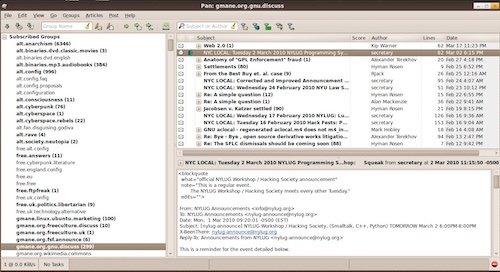
In 1997, when I left my dorm room, I left the internet too. Staying in, I’d be online for hours, reading the group, answering email, writing in PINE, drafting in BBEdit, and falling down whatever rabbit holes Usenet opened that day. But when I left for class, dinner, the library, a movie, someone else’s room, or even off-campus, I was gone. Not symbolically gone. Actually gone: no notifications, no texts, no quick checking the thread from a bus stop, no glancing at comments while waiting for coffee.
- 1I’m replying here especially meaning stories. The “community posts” that were more collective fiction happened very quickly. ↩︎
- 2Note: that’s not the same as when it appeared to readers, which could vary depending on where on the network it was injected and when it hit a particular reader’s feed. ↩︎
- 3Which a lot of us did because we were wordy like that. But other people, Lurking Dragon comes to mind, never posted anything about themselves. ↩︎