2 comment(s) so far. Please add yours!
How to Read Inez of the Upper Fourth
 The story of Inez de Vries unfolds through a series of documents—some official, pulled from the prim and unforgiving files of Saint Clare’s School for Girls; others are more intimate, drawn from the journals, letters, and scribbled notes of the girls themselves. Some will appear typed and orderly; others will retain the texture of handwriting, rendered in a cursive-style font. Readers are invited to step into the role of archivist, assembling the story from these traces, and imagining the lives that fill the gaps between pages—the tensions, the alliances, the secrets too dangerous to write down. Not everything will be explained. But Inez is watching. And she remembers.
Note: Comments are read and much appreciated. Much as I like reading them on Twitter and Bluesky, I love getting them here and promise to respond. Moreover your responses and ideas are included in the archives and may shift and change the story’s evolution.
(Writing this section of the story has me missing the ASS/SSS poster and story writer, the late, great Alex Birch 1Alex’s stories are other places on the ‘net, however I’m absolutely sure The Spanking Story Archive had his enthusiastic permission. So try there first.more than I can rightly say.)
Introduction – A Prefatory Word
 At Saint Clare’s, it is a truth universally acknowledged (at least by Ronnie Elwood) that any girl seen in Inez de Vries’s company after lights out is more or less doomed. Thus Clarissa Charrington — (a character created by reader JustABoomer) a perfectly decent Lower IV with a genius for self-pity and a Jelly Baby happiness scale— was slippered for nothing more shocking than talking in slippers. And this was before her role in the “The Secret Letters” or with Lady de Vries and Headmaster Lewis had even been revealed.
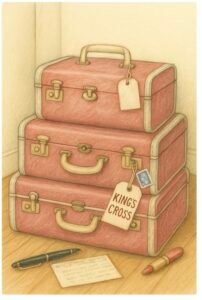 Trusting his indulgent understanding, Clarissa poured out her grievances to “Papa,” only to find he had abruptly transformed into “Father,” replying with all the ponderous dignity of the House of Commons. Clarissa, meanwhile, revealed a transformation of her own: the once devoted daughter emerged as a haughty, stroppy teenager, indignant at every turn and grandly refusing the hundred lines set for her. What might have remained a minor school punishment swelled into a correspondence campaign. Aunt Gladys, recalled from her Highland idyll with all the grace of a cat yanked from a sun-beam, contributed her tilted-halo irreverence by post, while Lady de Vries, with a deft flick of the foil at the Garden Fête, contrived to elevate the whole business into something resembling a diplomatic incident.
Thus, a few minutes’ chatter after lights out blossomed into an exchange of letters in which Papa became Father, daughter became adversary, and a melodrama about six slipper whacks on the knickers went speeding back and forth across the country by post — culminating in a command summons so imperious it required a telegram and sleeper train.
(Having trouble with the handwriting? Try the simple font version.)
Clarissa Elizabeth Charrington
Saint Clare’s School for Girls
Lower IV Dormitory
22 June 1955
Dearest Papa,
You must prepare yourself — for I have suffered one of the most frightful injustices in the whole history of school.
On Tuesday evening I was caught in the Upper IV common room after lights out. Yes, I own up: I was out of bed in slippers and dressing gown, with Inez. But what were we doing? Only talking. No feasts, no sneaking fags behind the lavs, no plotting to burn the place down — just talking!
The punishment? One Saturday detention and six whacks with the house slipper across our knickers. Papa, it was beastly humiliating. As if I were some dreadful hardened case when my only crime was conversation. I know girls who’ve had nothing more than a ticking-off for worse.
And everyone can see why. It wasn’t what I did — it was who I was with. Because it was Inez, the staff came swooping like hawks, and I was caught in their net. She can’t so much as sneeze without someone making a whole to-do of it. That I should catch it too seems monstrously unfair.
I bore it like a soldier, of course — not a single tear, though the corridor was thick with girls craning their necks to see. Matron tutted and gave me a spoonful of cod-liver oil afterwards (as if that helped!). I can’t help thinking it was all absurdly over the top.
Really, Papa, you must agree it was hardly tyranny beastliness. A detention and a slippering for twelve minutes after lights out? Mamma would have called it petty, I’m sure, and I daresay you might too.
Please do say I’m right to be indignant. It would comfort me to know at least someone thinks talking after lights out is not the moral equivalent of mutiny.
Your bruised but not beaten Darling, Daring Daughter,
Clarissa
P.S. On my Jelly Baby scale: 2½. Pride very sore, bottom less so (thank Heavens).
- 1Alex’s stories are other places on the ‘net, however I’m absolutely sure The Spanking Story Archive had his enthusiastic permission. So try there first. ↩︎

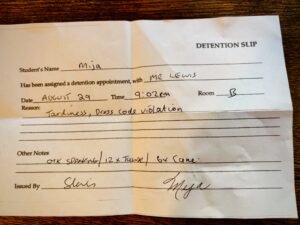
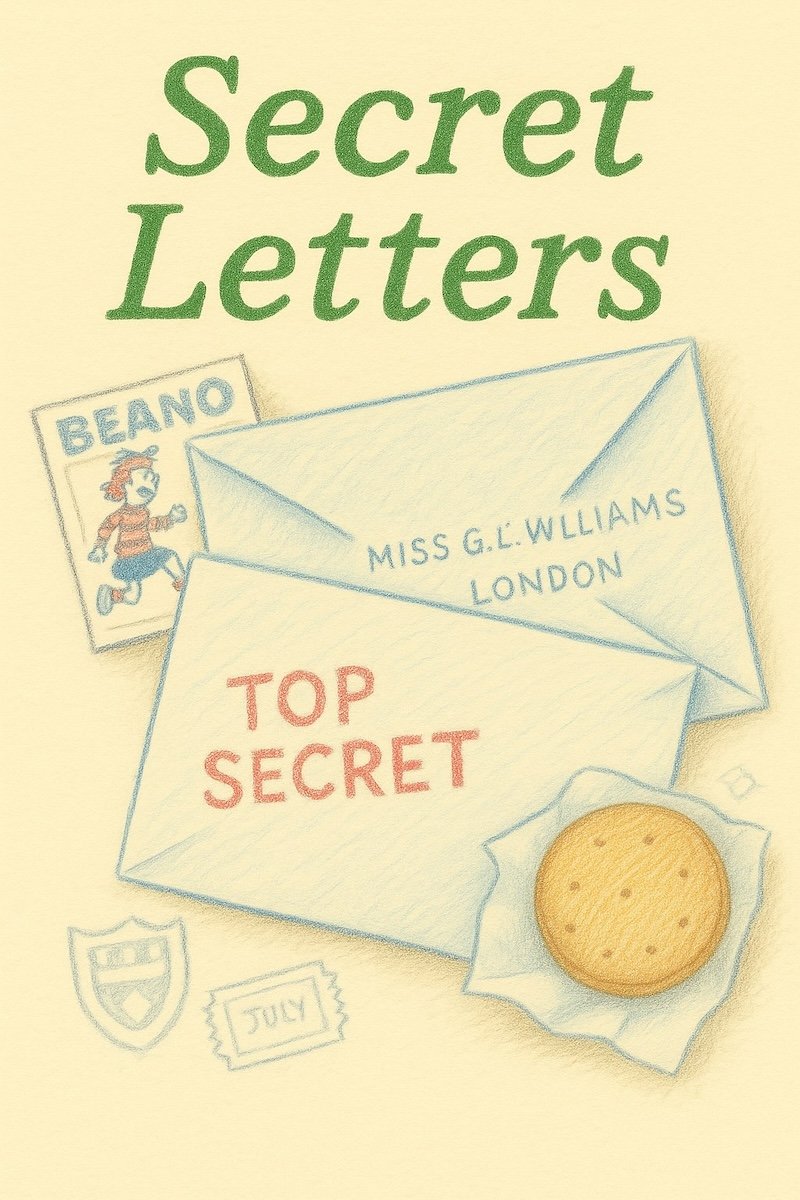
 The Secret Letters exchange began when Clarissa Charrington slipped a note into the post for her aunt Gladys, with Beano clippings and a sly message from Inez de Vries tucked inside. Gladys, amused and willing, forwarded the enclosure under her own respectable cover. In this way, the girls’ words travelled by official post — yet hidden in plain sight, a letter within a letter.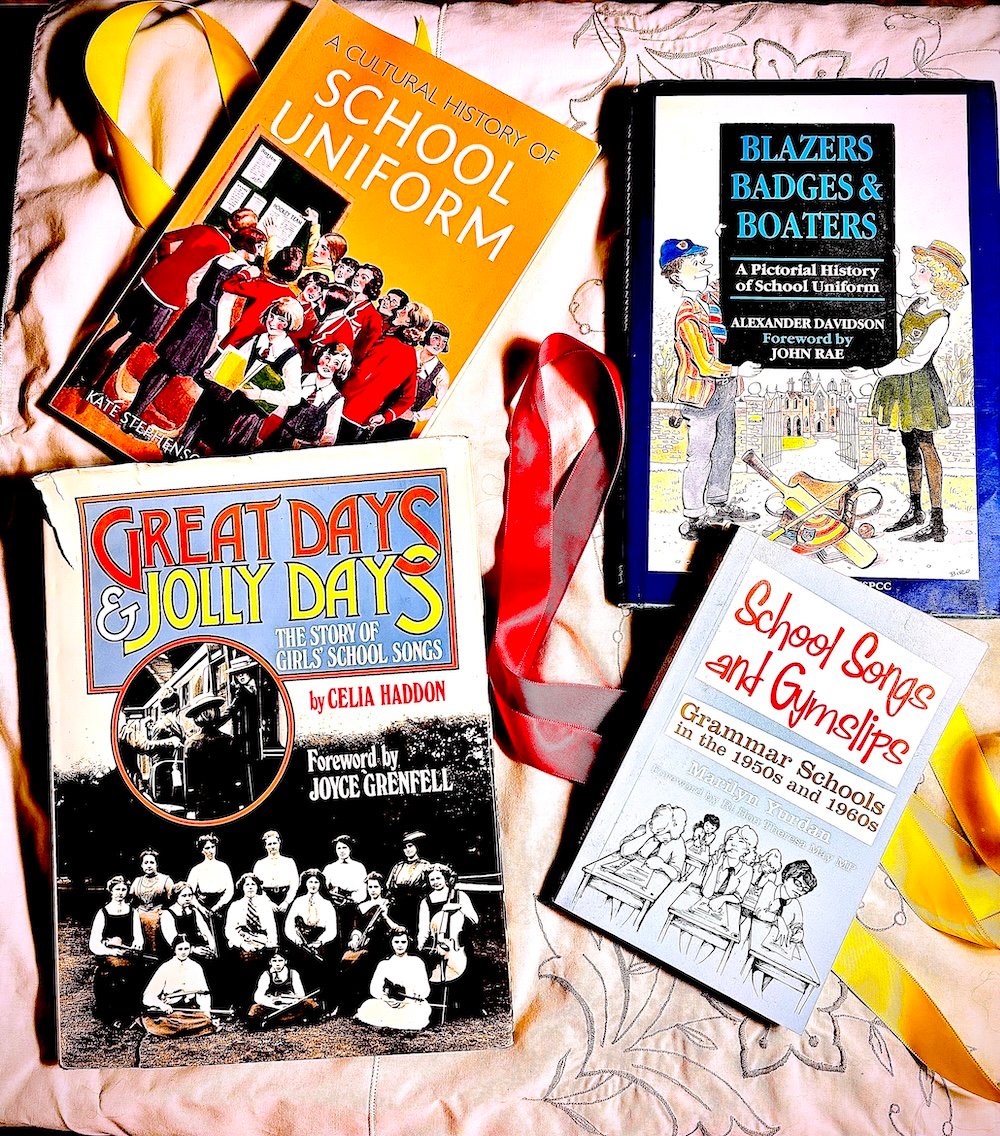

 Banner of “How to Read Inez of the Upper iV”The story of Inez de Vries unfolds through a series of documents—some official, pulled from the prim and unforgiving files of Saint Clare’s School for Girls; others are more intimate, drawn from the journals, letters, and scribbled notes of the girls themselves. Some will appear typed and orderly; others will retain the texture of handwriting, rendered in a cursive-style font. Readers are invited to step into the role of archivist, assembling the story from these traces, and imagining the lives that fill the gaps between pages—the tensions, the alliances, the secrets too dangerous to write down. Not everything will be explained. But Inez is watching. And she remembers.
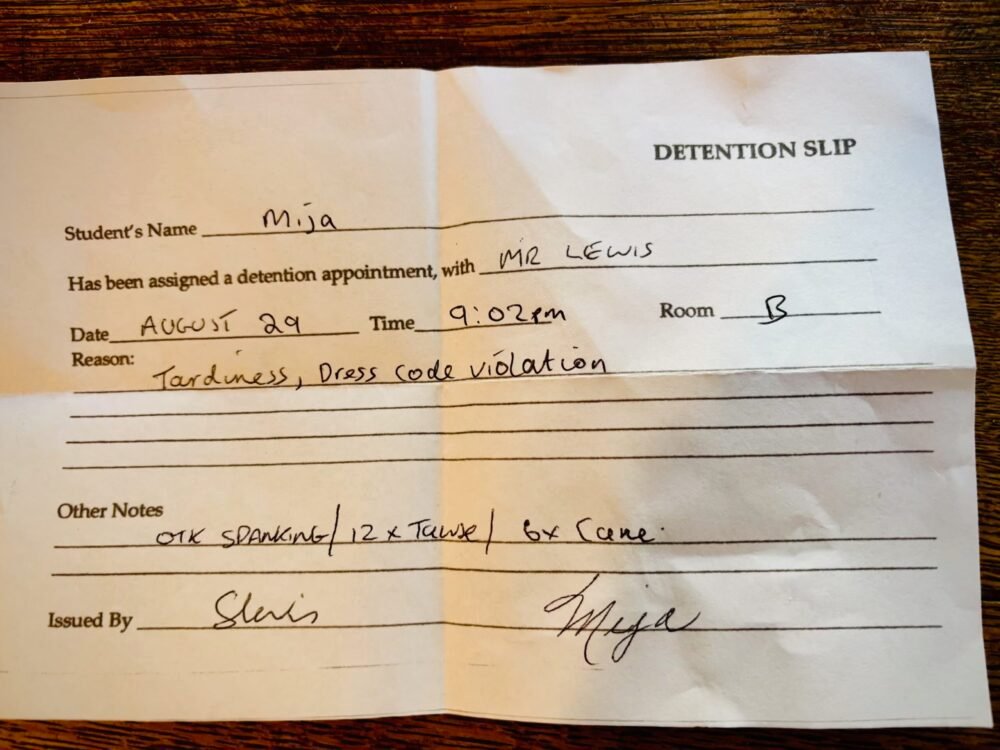
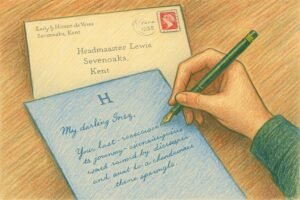 Most Fourth Form girls, after receiving a tawsing, a detention, and a caning, learn to keep their heads down. Inez de Vries, however, reached out to her mother. Her account of the affair travelled through the post as a stowaway, arriving at Hollingwood Hall with the stealth of a midnight feast.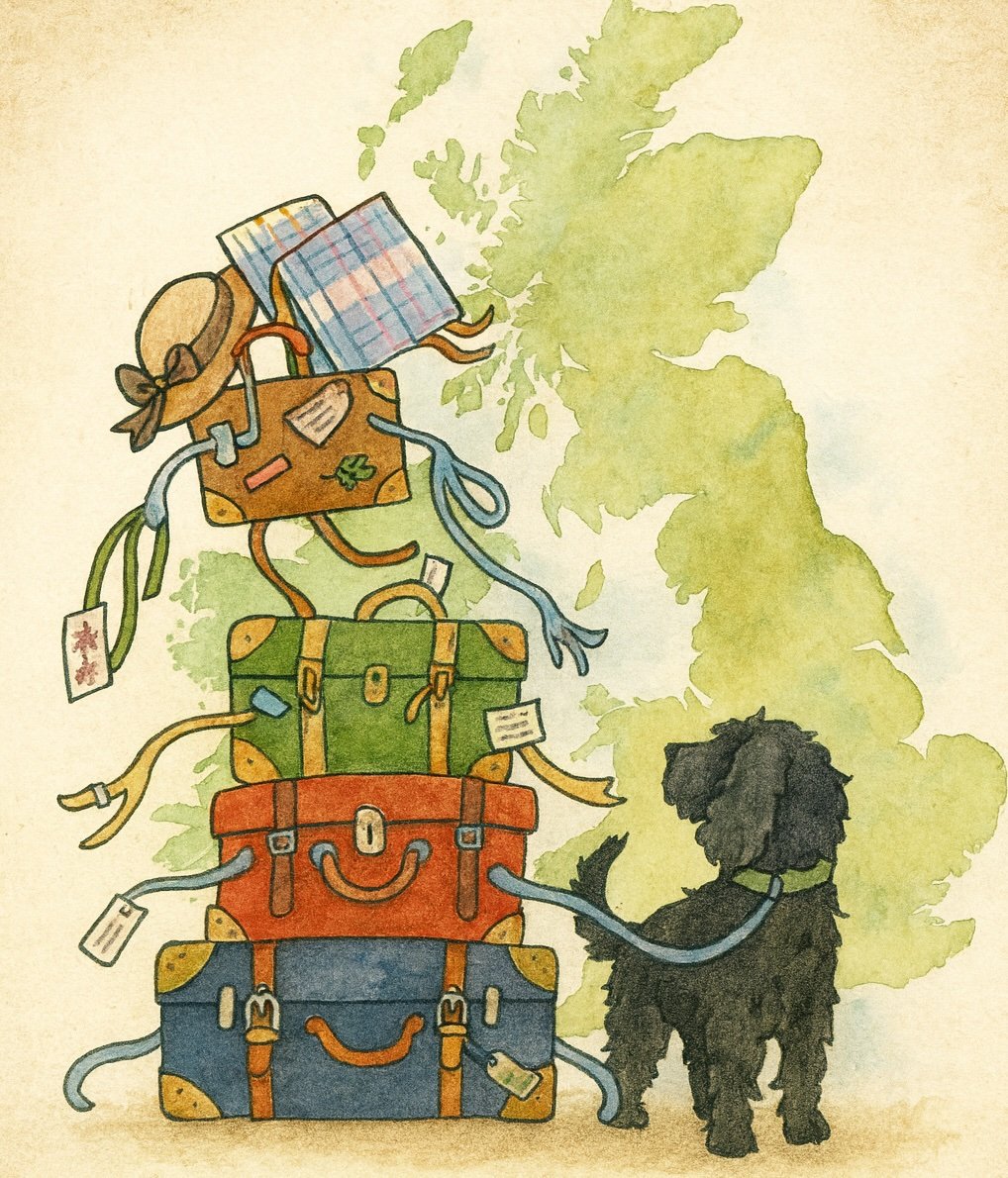

 The
The  The story of Inez de Vries unfolds through a series of documents—some official, pulled from the prim and unforgiving files of Saint Clare’s School for Girls; others are more intimate, drawn from the journals, letters, and scribbled notes of the girls themselves. Some will appear typed and orderly; others will retain the texture of handwriting, rendered in a cursive-style font. Readers are invited to step into the role of archivist, assembling the story from these traces, and imagining the lives that fill the gaps between pages—the tensions, the alliances, the secrets too dangerous to write down. Not everything will be explained. But Inez is watching. And she remembers.
 This first exchange between Clarissa and her father captures her earliest days at Saint Clare—tentative, observant, and already sharpening into something unmistakably her own. Clarissa’s letters home are notable not only for her frank admiration of one Inez de Vries—already firmly on the staff’s watch list—but also for the affection and respect she shows her father and his public life, and for introducing a private code between them: their “Jelly Baby Ledger.”
 Clarissa left the ledger on her father’s desk the morning she departed for school—a small, deliberate gift in her careful handwriting. Its pages are marked with doodled sweets in the margins and a hand-drawn scale that ranges from “catastrophic” to “triumphant.” In her letters home, each Jelly Baby count is shorthand for how she is faring—socially, strategically, and in terms of her all-important tuck supply.
 The paradox is part of the charm: Clarissa is still young enough to count her sweets in Jelly Babies, yet already capable of nuanced political metaphor and a subtle, sidelong interest in the de Vries family. Something is awakening here—not a rebellion exactly, but an alertness. She is watching Inez. She is watching the adults. And, increasingly, she is watching herself.